
Rear delt exercises help people keep shoulder balance, better posture, and safer movement. This text explains what these muscles do, how they work in daily life, and which simple training options support healthy shoulder function.
Role of Rear Delts in Body Mechanics
Rear delts support the shoulder joint and help guide the arm during pulling or rotating. They assist upper back muscles and take part in many daily tasks, even when a person does not think about them. When someone tries to keep their chest open and spine straight, rear delts hold the shoulder in a natural position. If this part stays weak for a long time, shoulders round forward and movement becomes less efficient.
In basic human motion, rear delts help with slow pulling actions, backward arm swings during walking, stabilizing weight when lifting objects, and supporting posture while sitting. These muscles are small, but shoulder performance depends strongly on their condition. Without rear delt work, pushing muscles often become too dominant, and the body loses balance.
When Rear Delt Training Becomes Useful
Many people notice early signs in everyday life. Shoulders shift forward, the upper back feels tight after sitting a long time, and pulling movements feel harder than expected. Some individuals sense mild discomfort when trying to lift arms behind the body. These signs usually show that rear delts work less than needed. Regular training helps restore balance and reduce tension in the shoulder area.
Rear delt work suits beginners too because exercises often use light weight. Slow and controlled motion activates muscle clearly and prevents sudden overload. Even simple practice brings visible improvement in posture over several weeks.
Main Rear Delt Exercises and Technique Basics
Below are exercises often used in general fitness practice. They are simple, safe for most individuals, and fit both home and gym routines.
T–Raise on Floor
This movement teaches a person to feel rear delt engagement. The body stays on the floor, which removes extra motion. Lifting arms slightly to each side activates rear delts with low stress. People usually notice clear muscle tension because movement isolates the area well. It is helpful when someone begins training or wants a light warm–up before heavier exercises.
Chest–Supported Incline Row
This exercise lets a person focus on shoulder movement without swinging the body. The chest stays on the bench, and the arms pull the weight upward with elbows slightly out. Rear delts assist the upper back in guiding the motion. Because the body does not shift, muscles work more evenly. Many gym routines include this exercise for safer pulling technique.
Cable Face Pull
This is one of the most well–known rear delt exercises. The rope attachment is pulled toward the face while elbows rise to shoulder level. Rear delts stabilize and rotate the arm outward. People often have better posture after doing face pulls regularly, because the movement trains the ability to keep shoulders open. Slow tempo and equal arm path make exercise more effective.
Seated Reverse Lateral Raise
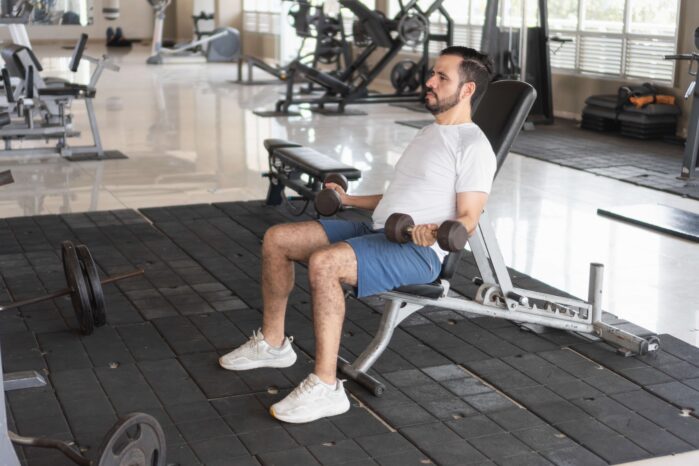
This isolation drill targets rear delts directly. The person sits, bends forward, and lifts light dumbbells to the sides. Because dumbbells are small, movement stays clean and controlled. Shoulders do the work instead of the whole body. Many individuals use this exercise at the end of training for focused muscle activation.
Practical Guidance for Rear Delt Training
Simple Cues for Safe Rear Delt Movement
- Keep shoulders relaxed, not lifted toward ears.
- Use light or medium weight to avoid swinging.
- Move arms with steady pace and calm breath.
- Stop exercise if sharp pain appears.
Common Routine Structure for Rear Delt Training
- light activation such as T–raise
- one moderate pulling exercise such as cable face pull
- one isolation exercise such as seated reverse lateral raise
- short rest between sets for stable technique
How Often to Train Rear Delts
Most people place these exercises two or three times per week. Training does not need a heavy load. Better to use light or medium weight and pay attention to slow motion. Muscles respond well to a calm tempo because rear delts stabilize the shoulder naturally. With regular training, the body starts to keep posture straighter without special effort.
Rear delts also recover relatively quickly. Still, rest between sessions is important to avoid tiredness that reduces technique quality. People with heavy pushing routines may notice faster improvement when rear delt exercises appear more regularly in their weekly plan.
Benefits Seen After Stable Practice
After several weeks, many individuals observe easier pulling motion, reduced tension in the neck and upper back, and a more comfortable sitting position. Rear delts help guide the shoulder joint into better alignment, making daily tasks feel lighter. This part of the shoulder influences the whole appearance of the upper body, because balanced muscles keep the chest open and the spine in a natural line.
People also report more confidence in movements such as rowing, reaching backward, or holding arms in a horizontal position. Strong rear delts assist in preventing forward–shoulder posture, which often appears in long desk work. Even small practice brings visible changes over time.
Mistakes That Reduce Training Efficiency
Some individuals try to use heavy weight too early. This leads to a swinging body and shifts work away from the rear delts. Fast reps also reduce muscle activation, because the shoulder does not spend enough time under tension. Another common mistake is lifting elbows too low, which makes the upper back take over movement. Correct form includes calm motion, a stable torso, and an arm path slightly above the shoulder line.
Warm–up is useful too. Simple arm circles or light band pulls prepare the shoulder joint for training. Without warm–up, movement may feel stiff. When shoulders relax and blood flow increases, exercises become smoother and safer.
Why Rear Delts Matter for Whole Body Balance
The shoulder area works as a system. Front, side, and back parts must stay in balance for natural body shape and safe daily activity. When rear delts receive proper training, pulling muscles and pushing muscles feel more equal. This reduces stress on the neck, arms, and upper back. Balanced shoulders also help people breathe deeper because the chest stays more open.
Even those who do not train regularly can benefit from simple rear delt exercises. They support posture during walking, standing, working at a desk, and carrying items. Strong rear delts guide the shoulder in the correct position and reduce the risk of uncomfortable tension after a long day.